

Black Seed (Nigella Sativa): Nature's Ancient Secret for Modern Immunity
You may have heard black seed referred to as "the cure for everything except death" a phrase with real historical weight. But what does that actually mean, and what does modern science say? In this article, we unpack the truth behind this remarkable little seed, why it has been treasured for over a thousand years, and why combining it with Manuka honey could be one of the most powerful natural wellness decisions you make.
What Is Black Seed (Nigella Sativa)?
Black seed — known scientifically as Nigella sativa — is a flowering plant native to parts of Eastern Europe, North Africa, and Southwestern Asia. Its small, jet-black seeds have been used in traditional and herbal medicine for thousands of years across Islamic, Ayurvedic, and ancient Egyptian practices. You may also know it by its other names: black cumin, black caraway, habbatus sauda, or simply nigella.
The seeds have a slightly bitter, peppery flavour with hints of thyme, and they are consumed whole, ground, as an oil, or as a supplement capsule.

The Science Behind Black Seed: What Makes It So Powerful?
Modern research has now validated much of what traditional medicine always knew. The key to black seed's power lies in its active compounds, particularly:
Thymoquinone (TQ) — the primary bioactive compound and the most studied. It has demonstrated antioxidant, anti-inflammatory, antimicrobial, and immunomodulatory properties in a wide range of clinical and laboratory studies.
Other important compounds include:
- Thymohydroquinone and thymol (antifungal, antibacterial)
- Fixed oils including linoleic and oleic fatty acids
- Alkaloids (nigellicine, nigellidine)
- Saponins
- Vitamins B1, B2, B3
- Minerals including zinc, iron, calcium, and phosphorus
A comprehensive review published in Food Science & Nutrition (2025) describes Nigella sativa as carrying significant antioxidant, anti-inflammatory, antiviral, antibacterial, antidiabetic, and anti-cancer properties — making it one of the most studied natural remedies in the world. (Source: Arshad et al., 2025, Food Science & Nutrition / PMC)
Evidence-Based Health Benefits
1. Immune System Support
Black seed is best known for its powerful ability to support a healthy immune system. Research published in Scientific Reports (2021) found that dietary supplementation with Nigella sativa significantly increased key immune markers, including interleukin-12 (IL-12) and gamma interferon—both of which play an essential role in helping the body defend against illness. The study also highlights the immune-enhancing properties of thymoquinone, the primary active compound in black seed, which has been shown to stimulate CD8+ T cells, some of the body's most important immune defenders. Source: https://www.nature.com/articles/s41598-021-86721-1
Beyond supporting immune function, black seed also helps activate the body's natural antioxidant defence systems. By reducing oxidative stress and protecting cells from free radical damage, it may help support long-term health and reduce one of the underlying contributors to chronic disease.
2. Anti-Inflammatory Properties
Chronic inflammation is linked to a wide range of health conditions, including heart disease, diabetes, arthritis, and autoimmune disorders. Research suggests that Black Seed may help reduce inflammation by lowering key inflammatory markers.
A randomised controlled trial found that Nigella sativa supplementation significantly reduced levels of the inflammatory markers IL-1β and IL-6 in overweight and obese women (Abd El-Hack et al., 2024).
A 2024 systematic review in Prostaglandins & Other Lipid Mediators also confirmed black seed's ability to improve glycaemic status in adults. (Source: Shirvani et al., 2024)
3. Cardiovascular and Metabolic Health
A review of eight randomised controlled trials published in the West African Journal of Medicine (April 2024) found that most studies showed black seed significantly improved lipid profiles, lowered blood pressure, and improved blood sugar control, leading the authors to recommend it as a supportive therapy for metabolic syndrome. (Source: PubMed, 2024)
A dedicated clinical trial also showed that participants consuming 5g of black cumin seed powder daily for 8 weeks saw significant reductions in total cholesterol, LDL ("bad") cholesterol, and triglycerides, alongside increases in HDL ("good") cholesterol. (Source: NIH/PMC, 2025)
4. Respiratory Health and Allergies
Nigella sativa has a long history of traditional use for supporting respiratory health, particularly in conditions such as asthma, bronchial spasms, and nasal congestion. Modern research suggests that black seed extract may help reduce the severity of allergy symptoms by lowering inflammation and exhibiting natural antihistamine-like effects. A clinical study also found that Nigella sativa extract significantly improved allergy symptoms and immune markers in individuals with allergic rhinitis (Nikakhlagh et al., 2011).
5. Antimicrobial and Antiviral Activity
Thymoquinone (Blackseed Oil) has been shown to be effective against a broad range of bacteria, fungi, and viruses. Research published in Food Science & Nutrition (2025) notes that Nigella sativa demonstrates activity even against antibiotic-resistant pathogens, and has shown potential against parasitic diseases including malaria. (Source: PMC12365395)
6. Antioxidant Protection
Black seed is rich in antioxidants that combat free radical damage which is a key driver of ageing, cancer risk, and degenerative disease. Its antioxidant activity has been highlighted as particularly significant in conditions related to oxidative stress. A review published in Molecular Biology Reports (2023) explored the molecular mechanisms of thymoquinone in detail. (Source: Sadeghi et al., 2023)
7. Skin and Wound Healing
Thymoquinone (Blackseed Oil) stimulates collagen production and reduces inflammatory cytokines, promoting faster wound healing. Animal and human studies have shown topical and internal use of Black Seed supports tissue repair, reduces psoriasis symptoms, and improves skin health. (Source: Healthline / Jared Meacham, PhD, 2024)
8. Emerging Research: Cancer and Neuroprotection
While still requiring further large-scale human trials, emerging research is exciting. A 2024 clinical trial reported that N. sativa, when used alongside conventional cancer treatment, helped reduce tumour size in breast cancer patients. (Source: Esmaeli et al., 2024, via Food Science & Nutrition) Laboratory research also shows Black Seed oil may be neuroprotective, with potential benefits for cognitive health and neurological disorders.

What Forms Does Black Seed Come In?
Black seed is versatile and accessible in several forms, each with their own uses:
Whole seeds — sprinkled on bread, salads, yoghurt, or consumed directly. The form referenced in Prophetic medicine.
Cold-pressed oil — a concentrated liquid form, commonly taken by the teaspoon or added to food. Rich in thymoquinone and fatty acids.
Capsules/supplements — Dosages in clinical studies typically range from 500mg to 2,000mg per day.
Ground/powdered seeds — can be mixed into smoothies, honey, or cooking.
Mixed with honey — a traditional and increasingly scientifically validated combination, covered in detail below.

Why Mixing Black Seed with Honey Is Such a Powerful Idea
The combination of black seed and honey is not a modern marketing invention — it is rooted in centuries of traditional wisdom and is now supported by scientific evidence.
Honey's Own Remarkable Properties
Honey is one of nature's most complex and studied natural foods. It contains amino acids, flavonoids, polyphenols, enzymes, minerals, vitamins, and sugars that provide genuine health benefits. It has well-established antioxidant, antimicrobial, antiviral, anti-inflammatory, and wound-healing properties.
Why Manuka Honey Specifically?
Manuka honey is produced by bees that pollinate the Leptospermum scoparium (Manuka) bush, native to New Zealand and Australia. What sets it apart from regular honey is its exceptional concentration of methylglyoxal (MGO) which is the compound primarily responsible for its potent antibacterial power. Research has found Manuka honey can contain up to 100 times more MGO than other honey types.
Manuka honey's key benefits include:
- Powerful antibacterial action — effective even against antibiotic-resistant strains (MRSA)
- Antiviral and anti-inflammatory effects
- Antioxidant protection — neutralising free radicals and supporting the immune system
- Prebiotic benefits — nourishing beneficial gut bacteria, which plays a crucial role in immune function
- Soothing effects — supporting throat health, oral hygiene, and digestive comfort
(Source: Healthline / Megan Soliman, MD, 2024) (Source: WebMD, 2025)
The Synergy: Black Seed + Manuka Honey Together
When these two powerhouses are combined, the result is more than the sum of their parts.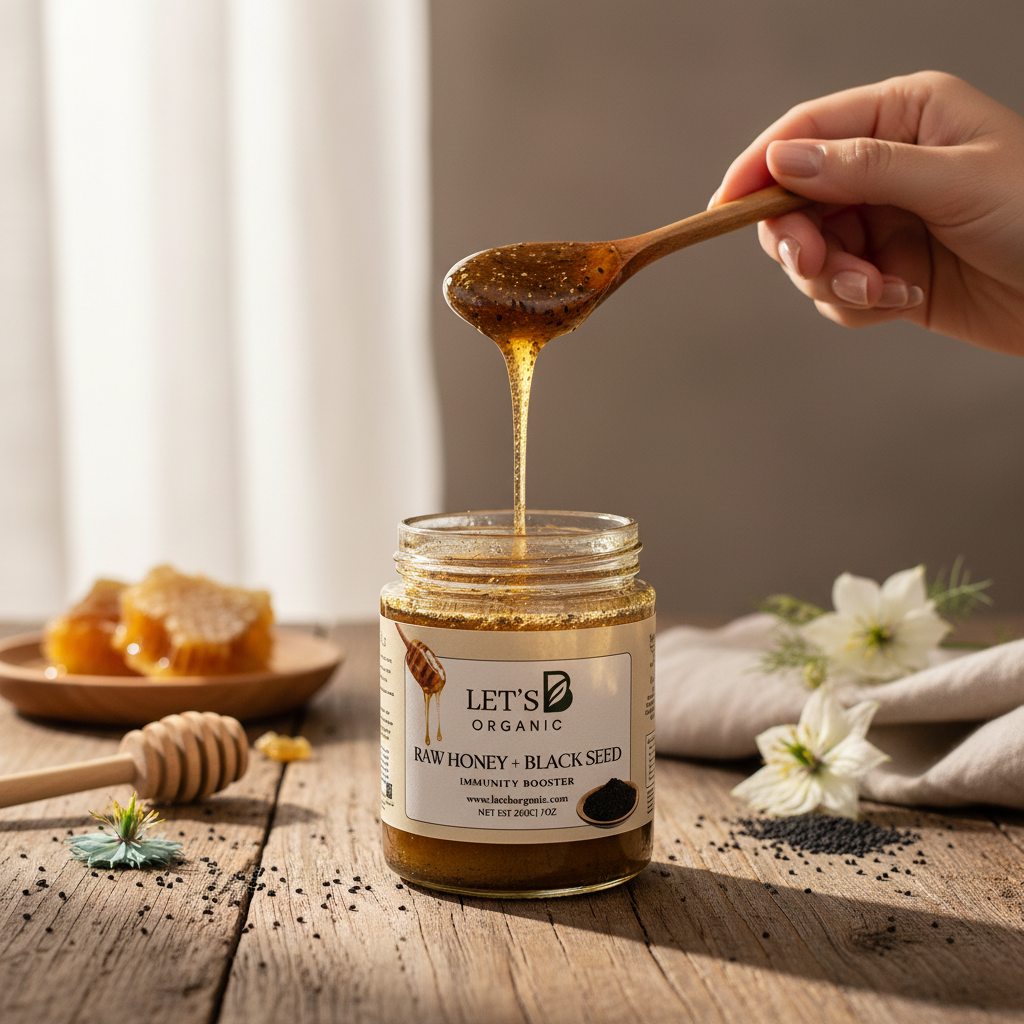
Research published in the Journal of Agricultural and Food Research (2023) found that black seed oil combined with honey enhanced antioxidant activity and increased the bioavailability of thymoquinone, the key active compound. (Source: Warinhomhoun et al., 2023)
A notable clinical case study published in Futurity Medicine (2024) investigated combining black seed and honey in a patient managing multiple conditions simultaneously, including hypertension, type-2 diabetes, knee osteoarthritis, and anxiety. The results showed significant reductions in blood pressure and blood sugar levels, a halving of the osteoarthritis score, and reduction in anxiety — with no adverse effects. (Source: Futurity Medicine, 2024)
Research has also shown honey and black seed demonstrate synergistic effects in wound healing (Javadi et al., 2018) and that the combination supports oligodendrocyte regeneration in the brain, suggesting potential neuroprotective benefits.
Gender-specific research has shown benefits for both men and women: females saw improvements in haemoglobin, systolic blood pressure, and blood glucose, while males showed favourable effects on cholesterol and blood sugar. (Source: ResearchGate, 2017)
Practically speaking, honey also makes black seed far more pleasant to consume as it masks its naturally bitter, pungent taste while adding its own nutritional depth.
Introducing Our Immunity Booster: Black Seed + Manuka Honey Mix
At Let's B Organic, we've brought this ancient combination into a convenient, organic, and premium product: our Black Seed Honey Mix – Immunity Booster.
We've combined organic Nigella sativa with Manuka honey — chosen specifically for its superior antibacterial and immune-supporting properties — to create a daily supplement that delivers the benefits of both in their most natural and bioavailable form.
This is the kind of product rooted in over a thousand years of traditional wisdom, now validated by modern science. Whether you're looking to support your immune system daily, manage inflammation, or simply add a powerful natural supplement to your morning routine — this is the place to start.
👉 Shop the Black Seed Honey Mix – Immunity Booster here
How to Use It
A common suggested intake is one teaspoon of the honey mix daily, ideally on an empty stomach in the morning. Consistency is key, so the benefits of black seed in particular are cumulative and best seen with regular use over time.
As with any supplement, if you are pregnant, breastfeeding, on prescription medication, or managing a health condition, please consult your GP or healthcare provider before use. Black seed should complement, not replace, medical treatment.
Safety Profile
The Food and Drug Administration (FDA) classifies Nigella sativa as "Generally Recognised as Safe" (GRAS) when used as a food ingredient. A narrative review published in Asian Biomedicine (2020) reported that no clinical trials to date have reported severe adverse effects in humans. (Source: Medshadow.org, 2025)
Black seed is generally well-tolerated at typical dietary and supplemental doses. As always, those with specific health conditions or who are pregnant should seek advice from a qualified healthcare professional.
The Bottom Line
Black seed (Nigella sativa) is one of nature's most studied and most celebrated natural remedies. From a 1,400-year-old prophetic tradition to over a thousand peer-reviewed modern studies, its status as a genuinely powerful wellness supplement is well-earned. It works not by acting as a magic cure, but by supporting your body's own systems — immune function, inflammation regulation, antioxidant defence, and metabolic health.
Pairing it with the unique antibacterial and immune-modulating power of Manuka honey creates a combination with deep roots in both tradition and science. That's precisely what we've done in our Immunity Booster — and we think once you try it, you'll understand why people have valued this remarkable seed for millennia.
References
- Arshad et al. (2025). Functional, Nutraceutical, and Pharmacological Properties of Black Seed. Food Science & Nutrition / PMC. https://pmc.ncbi.nlm.nih.gov/articles/PMC12365395/
- Razmpoosh et al. (2024). A crossover randomized controlled trial examining the effects of black seed (Nigella sativa) supplementation on IL-1β, IL-6 and leptin, and insulin parameters in overweight and obese women. BMC Complementary Medicine and Therapies. https://link.springer.com/article/10.1186/s12906-023-04226-y
- Systematic review of randomized controlled trials in uses of Nigella sativa (Black seed) in metabolic syndrome. (2024). West African Journal of Medicine / PubMed. https://pubmed.ncbi.nlm.nih.gov/
- Black Cumin Seed (Nigella sativa) Confers Anti-Adipogenic Effects and Lipid-Lowering Properties. (2025). NIH/PMC. https://www.ncbi.nlm.nih.gov/pmc/articles/PMC12401715/
- The effect of dietary supplementation with Nigella sativa mediates immunological function in male Wistar rats. (2021). Scientific Reports / Nature. https://www.nature.com/articles/s41598-021-86721-1
- Nigella sativa (Black Cumin): A Promising Natural Remedy for Wide Range of Illnesses. (2019). NIH/PMC. https://www.ncbi.nlm.nih.gov/pmc/articles/PMC6535880/
- Black Cumin (Nigella sativa L.): A Comprehensive Review on Phytochemistry, Health Benefits, Molecular Pharmacology, and Safety. (2021). NIH/PMC. https://www.ncbi.nlm.nih.gov/pmc/articles/PMC8225153/
- Sadeghi, E., Imenshahidi, M., & Hosseinzadeh, H. (2023). Molecular mechanisms and signaling pathways of black cumin (Nigella sativa) and its active constituent, thymoquinone. Molecular Biology Reports, 50(6). https://doi.org/10.1007/s11033-023-08390-z
- Shirvani et al. (2024). The effect of Nigella sativa supplementation on glycemic status in adults. Prostaglandins & Other Lipid Mediators. https://pubmed.ncbi.nlm.nih.gov/38056714/
- Nigella sativa seed extract alleviates symptoms of allergic diarrhea in mice. (2012). PLOS ONE / NIH. https://www.ncbi.nlm.nih.gov/pmc/articles/PMC3387213/
- Targeting Cancer Through Thymoquinone: From Molecular Mechanisms to Clinical Prospects. (2025). NIH/PMC. https://www.ncbi.nlm.nih.gov/pmc/articles/PMC12652967/
- Nutraceutical Synergy: Black Seed Supplementation in Hypertension, Diabetes, Knee Osteoarthritis and Anxiety. (2024). Futurity Medicine. https://futurity-medicine.com/index.php/fm/article/view/111
- Warinhomhoun et al. (2023). Effects of black seed oil combined with olive oil or honey on antioxidant activities, phenolic content, and identification and quantification of thymoquinone. Journal of Agricultural and Food Research. https://doi.org/10.1016/j.jafr.2023.100891
- Gender differences on the effects of honey and black seed mixture supplementation. (2017). ResearchGate. https://www.researchgate.net/publication/318054310
- Honey and Black Seed Synergistically Promote Regeneration of Oligodendrocytes. Researchers Links. https://researcherslinks.com/current-issues/Honey-and-Black-Seed-Synergistically-Promote/20/1/7402/html
- Manuka Honey: Health Benefits and Uses. Healthline / Megan Soliman, MD. (Updated 2024). https://www.healthline.com/nutrition/manuka-honey-uses-benefits
- Manuka Honey: Medicinal Uses, Benefits, and Side Effects. WebMD. (Updated 2025). https://www.webmd.com/a-to-z-guides/manuka-honey-medicinal-uses
- Black Seed: Overview, Uses, Side Effects. WebMD Vitamins. https://www.webmd.com/vitamins/ai/ingredientmono-901/black-seed
- Black Seed Oil: Benefits, Dosage & Safety. MedShadow. (Updated 2025). https://medshadow.org/supplements/what-is-black-seed-benefits-safety-recommended-dose/
- Sahih Bukhari 7:591 — Hadith on Black Seed.
This blog is for educational and informational purposes only. It does not constitute medical advice. Always consult a qualified healthcare professional before starting any new supplement, especially if you are pregnant, breastfeeding, taking medication, or managing a health condition.
© Let's B Organic | www.letsborganic.com